Proof, not words
See it work.
- 01
Owner dashboard
The whole operation, one screen.
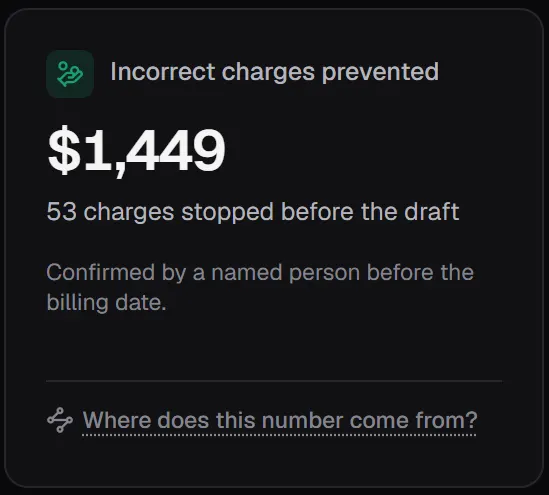
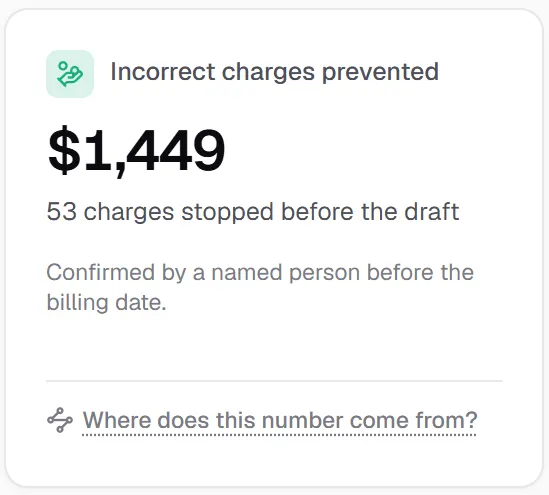
- 02
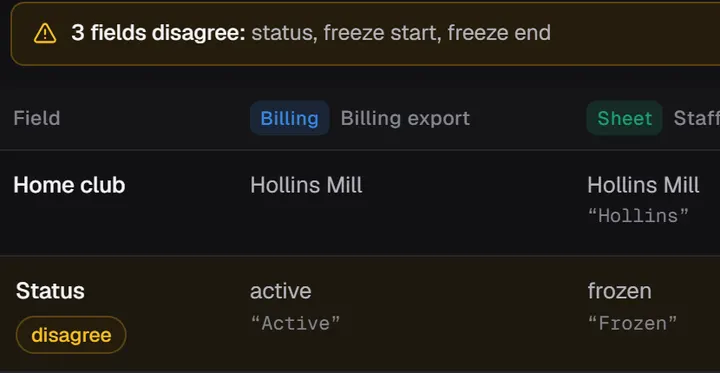
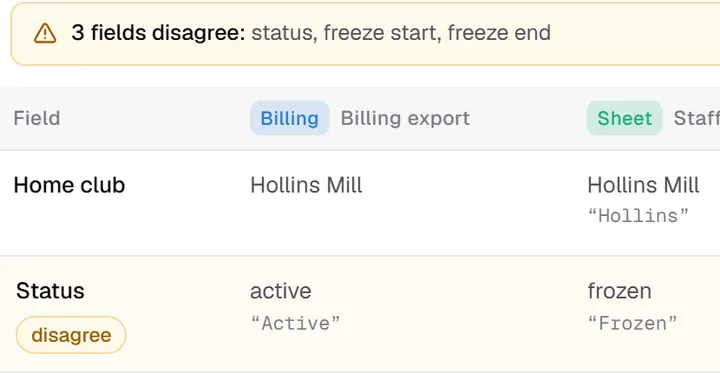
Billing checks
Billing caught before it runs.
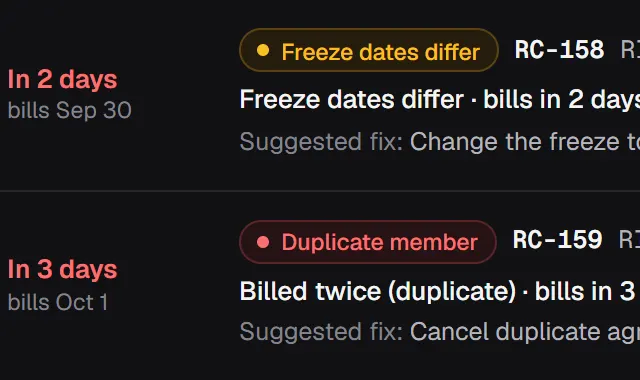
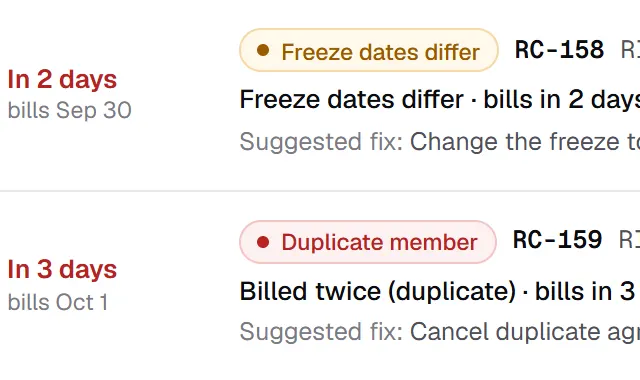
- 03
Data lineage
Every number shows its source.
- 04
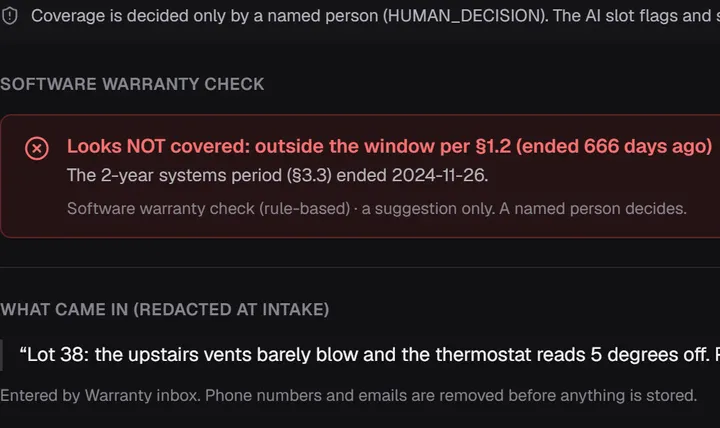
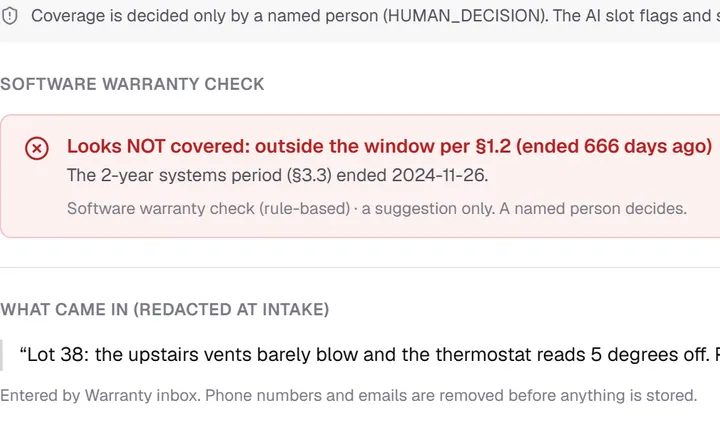
Claim review
Software suggests. A person decides.
The work, in motion
Illustrative · fictional data


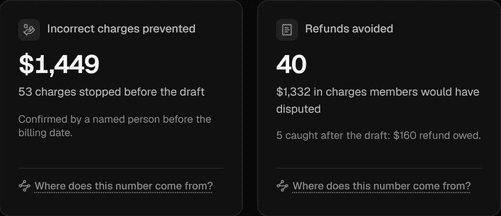
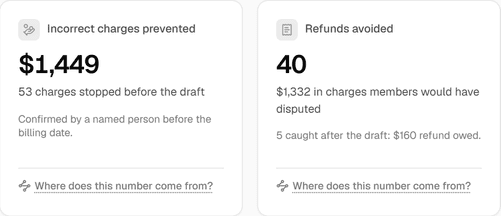
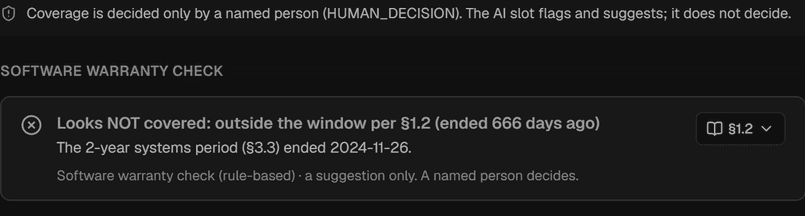
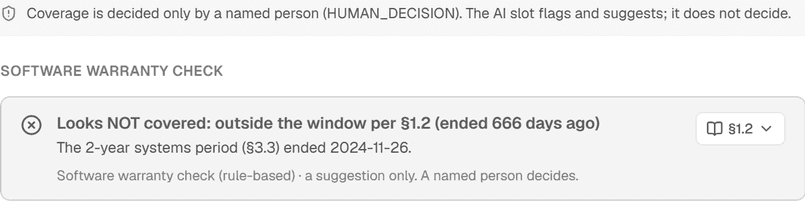


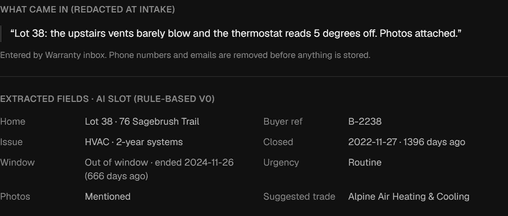
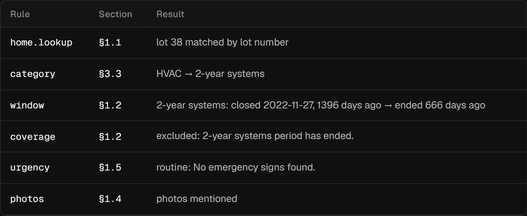
Your team keeps every decision.
What we build.
Four things we build, on your data.
Company wiki that writes itself
Cited pages from your own documents, kept current.
Billing & data checks
Mismatches across systems, caught before they cost you.
Document & photo intake
Forms, invoices and photos become checked records.
Owner dashboards
Every number traced back to its source.
How it works.
Step 1: Map one workflow
We sit with the people who do it.
Step 2: Free pilot on your data
Time-boxed. You see results first.
Step 3: Run it with your team in control
Review queues, approvals and an off switch.
Why i²
Built by engineers. Run your way.
We come from machine-learning research and engineering. We work with teams of about 50 to a few thousand people.
Your team decides every call.
AI does the repetitive work. Uncertain cases wait for a person.
A written data agreement first.
Signed before you share anything. We can build inside your environment.
You work with the builder.
The person who scopes your project builds it and answers for it.
Is our data safe?
Every engagement starts with a written data agreement, signed before you share anything. If your data can't leave your environment, we build and run the system there.
What if AI can't do it?
Then we tell you, usually during the free, time-boxed pilot, before you've paid for anything. Sometimes a simpler fix works better. A clear "no" is a useful result.
How long does it take?
The free, time-boxed pilot has a length we agree up front. A custom build with integrations usually takes 8–14 weeks.
Will this replace our staff?
It removes repetitive steps, not judgment. People move from typing and sorting to reviewing exceptions. How you use the time is your decision.
Does it work with our systems?
Usually, yes: email, ERP, CRM, accounting and file storage, through their APIs where possible. We check this during the pilot, before quoting anything.
Free pilot
